


News
Salt Spray Test Explained: Principles, Standards, Types, and Industrial Applications


Introduction
Salt spray testing is one of the most widely used accelerated corrosion testing methods for evaluating the corrosion resistance of metals and surface treatments, including electroplating, passivation, and coating systems.
By simulating harsh salt-containing environments, salt spray tests can quickly evaluate how materials and protective coatings perform against corrosion. This helps manufacturers optimize production processes, improve product reliability, and ensure consistent quality before products enter the market.
Among various salt spray methods, Neutral Salt Spray (NSS), Acetic Acid Salt Spray (ASS), and Copper Accelerated Acetic Acid Salt Spray (CASS) are the three most commonly applied testing methods in industrial production. Although they share the same basic principle, their corrosion environments, testing intensity, and application purposes are significantly different.
Understanding the differences between these methods allows engineers, quality control teams, and manufacturers to select the right test standard and obtain more accurate corrosion performance results.
How Does Salt Spray Testing Work?
The fundamental purpose of a salt spray test is to accelerate corrosion by creating an artificial salt and humidity environment.
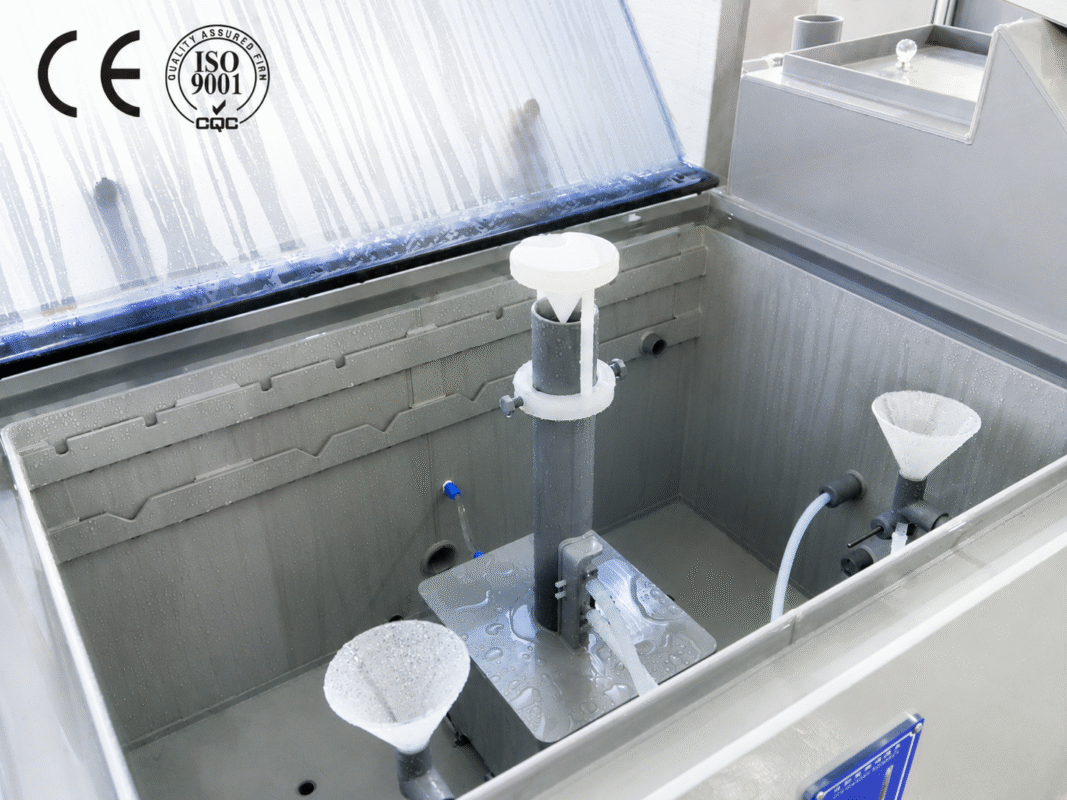
During testing, a salt solution is atomized into fine droplets and continuously sprayed onto the surface of test samples. The deposited salt mist forms an electrolyte film on the metal surface, triggering electrochemical corrosion reactions.
The corrosion process mainly includes three stages:
1. Salt Mist Generation
A controlled salt solution, usually based on sodium chloride (NaCl), is mixed with purified compressed air and converted into fine mist particles. These particles evenly settle on the test samples, creating a controlled corrosive environment similar to marine or industrial conditions.
The salt concentration and pH value are key factors that determine the severity of different salt spray tests.
2. Electrochemical Corrosion Reaction
The salt solution creates an electrolyte layer on the metal surface. This causes microscopic electrochemical cells to form:
- The anode area loses electrons and begins to dissolve, resulting in corrosion.
- The cathode area reacts with oxygen and moisture to complete the corrosion process.
The visible results may include rust formation, coating blistering, discoloration, or surface degradation.
3. Accelerated Corrosion Mechanism
Salt spray tests accelerate natural corrosion by controlling environmental conditions such as:
- High salt concentration
- Continuous spraying
- Elevated temperature
- High humidity
These conditions significantly increase corrosion reaction rates and shorten the time required to evaluate material durability.
However, accurate results depend on strict control of testing parameters, sample preparation, and equipment calibration.
Three Main Types of Salt Spray Tests
1. Neutral Salt Spray Test (NSS)
Overview
Neutral Salt Spray (NSS) is the most commonly used salt spray testing method. It simulates natural marine and humid environments without adding acidic agents or corrosion accelerators.
Because the test conditions are relatively mild and close to real atmospheric corrosion, NSS is widely used for basic corrosion resistance evaluation of metal products and surface coatings.
It is commonly applied to:
- Stainless steel components
- Carbon steel parts
- Copper alloys
- Electroplated products
- Passivated and coated surfaces
Main Testing Parameters
Typical NSS conditions include:
- Salt solution: 5% sodium chloride solution
- pH value: approximately 6.5–7.2
- Test temperature: 35 ± 1°C
- Relative humidity: above 85%
- Continuous salt spray exposure
The test duration depends on product requirements. Common testing periods include 24 hours, 48 hours, and 72 hours.
Typical Applications
NSS is mainly used for:
- Routine quality inspection
- Production process verification
- Incoming material inspection
- Basic corrosion resistance evaluation
For many standard metal products, NSS provides a reliable and cost-effective method for quality control.
2. Acetic Acid Salt Spray Test (ASS)
Overview
Acetic Acid Salt Spray (ASS), also known as acidic salt spray testing, is developed from NSS by adding acetic acid to create a more aggressive corrosive environment.
This method simulates acidic industrial atmospheres, acid rain conditions, and environments with higher corrosion risks.
Compared with NSS, ASS accelerates the breakdown of protective surface films and provides a more demanding evaluation of corrosion resistance.
Main Testing Parameters
Typical ASS conditions include:
- Salt solution: 5% sodium chloride
- Acetic acid added to adjust acidity
- pH value: approximately 3.1–3.3
- Test temperature: 35 ± 1°C
Other test conditions are similar to NSS, but precise pH control is essential to maintain consistent results.
Typical Applications
ASS is commonly used for products requiring higher corrosion resistance, including:
- Automotive components
- Outdoor industrial equipment
- Chemical industry parts
- Decorative electroplated products
It is especially useful for evaluating whether products can withstand more challenging environments beyond normal atmospheric exposure.
3. Copper Accelerated Acetic Acid Salt Spray Test (CASS)
Overview
Copper Accelerated Acetic Acid Salt Spray (CASS) is one of the most aggressive salt spray testing methods.
Based on ASS, CASS introduces copper chloride (CuCl₂) as a corrosion accelerator. The addition of copper ions greatly increases corrosion activity, allowing manufacturers to evaluate high-performance coatings and finishes within a shorter testing period.
The key advantage of CASS is rapid screening of corrosion resistance, making it suitable for premium products and advanced surface treatments.
Main Testing Parameters
Typical CASS conditions include:
- Salt solution: 5% sodium chloride
- Acetic acid adjustment
- Copper chloride accelerator added
- pH value: approximately 3.1–3.3
- Test temperature: 50 ± 1°C
Because corrosion develops much faster, CASS testing usually requires shorter exposure times compared with NSS and ASS.
Typical Applications
CASS is widely used for:
- High-end decorative plating
- Automotive luxury components
- Precision electronic connectors
- Multi-layer coating systems
It is particularly valuable during product development, coating optimization, and advanced quality verification.
NSS vs ASS vs CASS: Key Differences
| Test Method | Corrosion Environment | Corrosion Level | Main Applications |
| NSS | Neutral salt environment | Mild | Standard products, basic corrosion evaluation |
| ASS | Acidic salt environment | Medium to high | Industrial products and higher corrosion requirements |
| CASS | Acidic environment with copper acceleration | Very high | Premium products and advanced coatings |
The three methods do not represent “better” or “worse” testing options. The correct choice depends on:
- Product application environment
- Required corrosion resistance level
- Surface treatment technology
- Customer or industry standards
Selecting the appropriate test method is critical for obtaining meaningful results.
Common Mistakes in Salt Spray Testing
1. Incorrect pH Control
Different salt spray methods require different pH ranges. Incorrect adjustment can significantly affect corrosion results.
For ASS and CASS testing, accurate pH measurement is especially important. Using proper measuring equipment instead of simple test strips helps maintain testing reliability.
2. Improper Sample Preparation
Surface contamination, fingerprints, scratches, or damaged coatings can influence corrosion behavior.
Before testing:
- Samples should be cleaned properly.
- Protective coatings should not be damaged.
- Cutting edges should be properly protected when necessary.
Proper preparation ensures that test results reflect actual product performance.
3. Unstable Test Conditions
Temperature, humidity, spray rate, and equipment condition must remain within standard requirements.
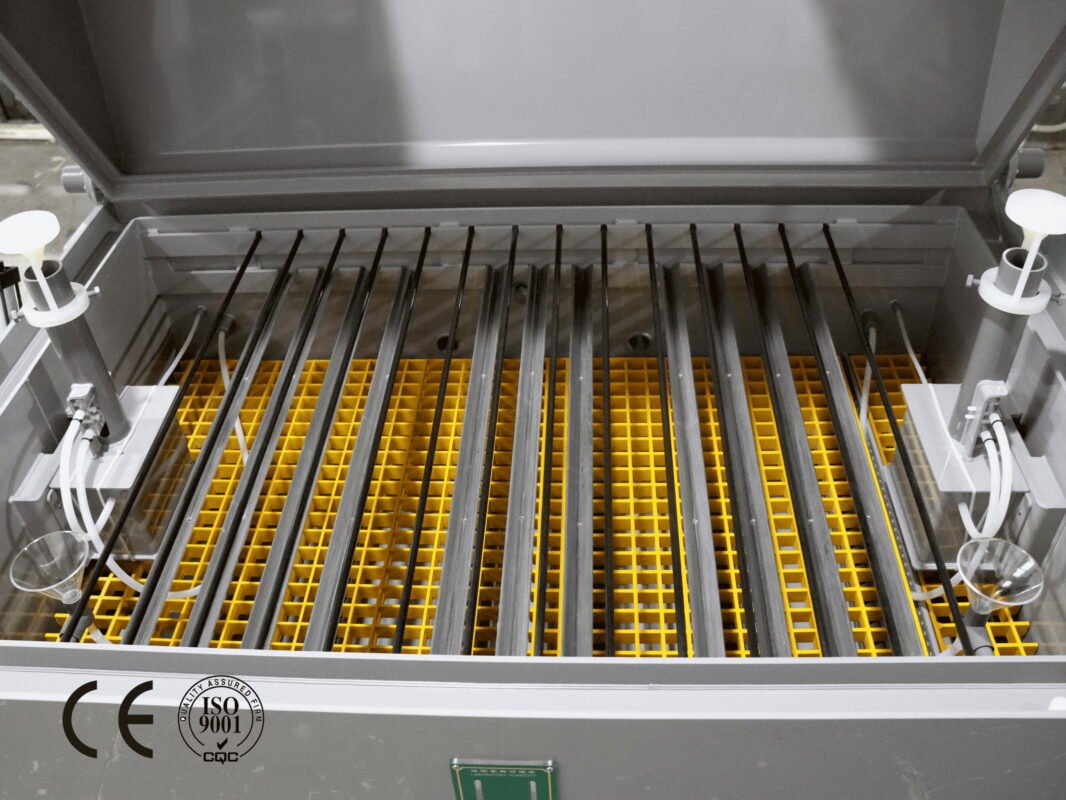
Regular calibration and maintenance of salt spray chambers are necessary to guarantee repeatable results.
4. Choosing the Wrong Test Method
Using an overly aggressive test may create unrealistic failure results, while using a mild test may fail to reveal product weaknesses.
For example:
- Standard hardware may only require NSS testing.
- Premium decorative coatings may require CASS testing.
Choosing the right method improves testing efficiency and reduces unnecessary costs.
Conclusion
Salt spray testing provides manufacturers with a reliable way to evaluate corrosion resistance and improve product durability.
NSS, ASS, and CASS represent different levels of corrosion evaluation:
- NSS is ideal for general corrosion resistance testing.
- ASS provides stronger evaluation for demanding environments.
- CASS offers rapid and intensive assessment for high-performance products.
By selecting the correct testing method and strictly controlling key factors such as solution preparation, pH value, temperature, and sample handling, manufacturers can achieve more accurate results and improve product quality.
For companies producing metal components, coated products, and precision parts, professional salt spray testing is not only a quality control process but also an important step toward building more reliable and competitive products.