News
Why Do We Need Cyclic Corrosion Testing?


Cyclic Corrosion Testing is an important method for evaluating the corrosion resistance and durability of metals, coatings, and protective materials. By simulating changing environmental conditions, this testing helps manufacturers understand how products perform under repeated exposure to salt spray, humidity, and drying cycles.
1. Corrosion Is Closer Than We Think
A rusty car door, a metal fence with peeling paint, or screws that have turned reddish-brown after being left outdoors — these are familiar signs of corrosion. They may look like small cosmetic problems, but corrosion can gradually affect the strength, appearance, and service life of metal products. It is especially challenging in places where products are exposed to rain, high humidity, coastal air, or road salt during winter.
For manufacturers, the important question is not simply whether a metal part can rust. It is how well the material and its protective coating can withstand the environment in which the product will be used. Testing in a laboratory helps identify weaknesses before products are delivered to customers. Cyclic Corrosion Testing is one method used to make this evaluation more representative of changing environmental conditions.
2. Why Is Continuous Salt Spray Not Always Enough?
Consider a car driven near the sea or on roads treated with de-icing salt. During a journey, salt and water may settle on the body, wheels, and undercarriage. Later, sunlight and warm air dry the surfaces. At night, cooler temperatures and damp air may make them wet again. The vehicle repeatedly experiences wet, dry, and humid conditions rather than one constant environment.
3. How Does Cyclic Corrosion Testing Work?
The basic idea is straightforward: instead of keeping a sample in one condition, the test chamber changes the environment according to a programmed cycle. A typical method may include the following stages, although the exact sequence and settings depend on the selected standard and test requirements:
- Salt spray: A salt solution is sprayed onto the specimen to create a chloride-rich environment similar to exposure in coastal areas or on salted roads.
- Humidity or wetting: High humidity or condensation keeps the surface moist. A thin film of water can act as an electrolyte, allowing electrochemical corrosion reactions to take place.
- Drying: The chamber changes to drying conditions so that water evaporates while some salt deposits remain on the surface. This changes the local corrosion environment.
The cycle is repeated for a specified period. Moisture, salt concentration, oxygen availability, and temperature all influence corrosion. Repeated wetting and drying can also put stress on paint and other protective layers. For this reason, cyclic testing can reveal coating defects or corrosion behavior that may not be obvious in a single, continuous exposure test.

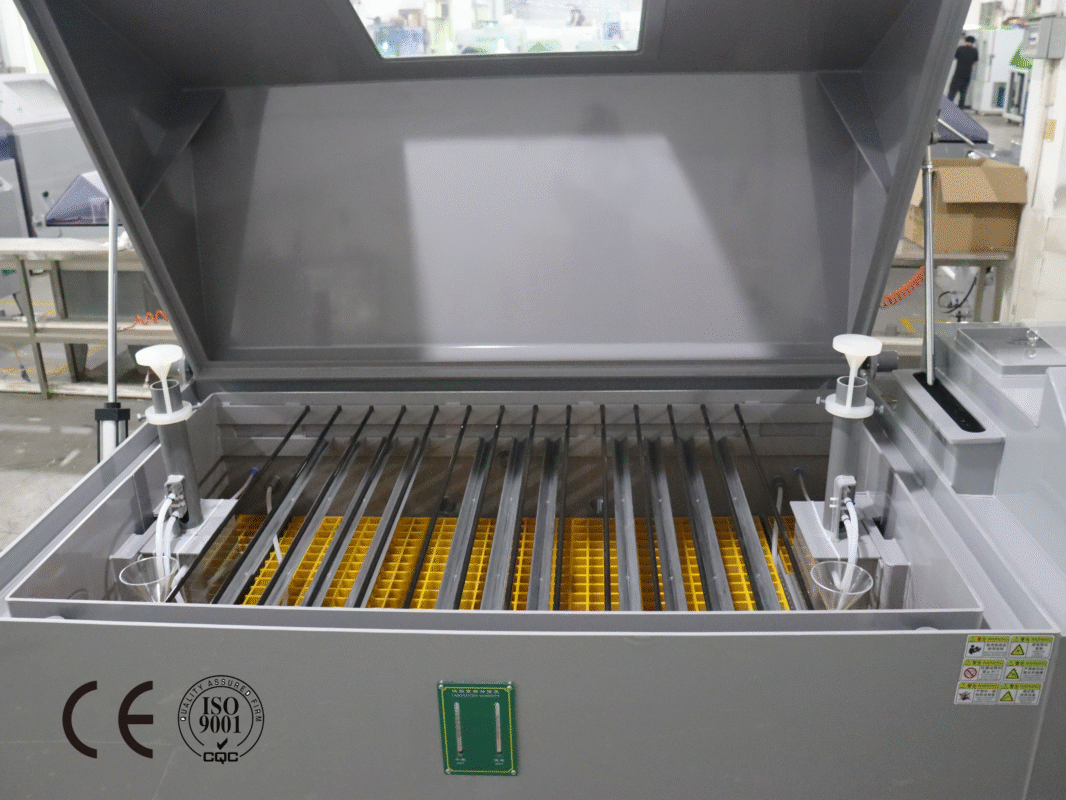
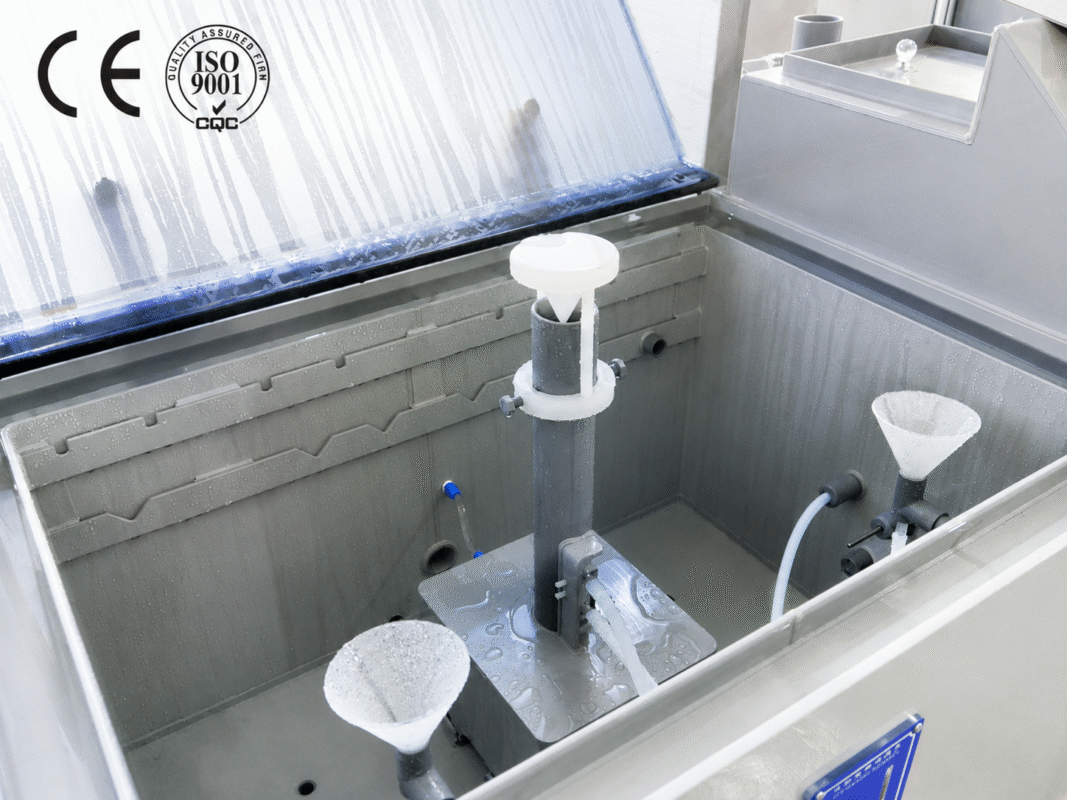
The internal test area provides a controlled environment for programmed exposure cycles.
4. Which Industries Use Cyclic Corrosion Testing?
Cyclic corrosion testing is particularly relevant to manufacturers of products that contain metal parts or protective surface coatings. Common applications include:
- Automotive: Car body panels, chassis parts, wheels, brackets, fasteners, and painted or plated components. Testing helps assess how these parts resist moisture and road salt.
- Electronics and electrical equipment: Connectors, terminals, metal enclosures, control boxes, and outdoor communication equipment, where corrosion may affect appearance or electrical connections.
- Construction and building materials: Steel structures, metal doors, window frames, outdoor railings, roofing parts, and galvanized fasteners exposed to rain and humid air.
- Marine equipment: Metal fittings, deck hardware, brackets, and protective coatings exposed to seawater, sea spray, and salty air.
- Metal processing and hardware: Steel and aluminum parts, bolts, nuts, plated components, and painted products that need corrosion protection during storage or use.
5. What Can Manufacturers Learn from the Test?
A corrosion test is useful when its results help guide a practical decision. By comparing specimens under the same test conditions, manufacturers can evaluate different metals, compare coating systems, and check whether a surface treatment provides the expected protection. Test observations may include red rust, white corrosion products, blistering, paint peeling, or corrosion spreading from a scratch or cut edge.
This information can support material selection, coating development, supplier evaluation, and routine quality control. It can also help engineers identify vulnerable areas in a product and improve its design. Laboratory testing does not give an exact prediction of how many years a product will last outdoors, but it provides repeatable comparative data under defined conditions — an important part of product development and quality assurance.

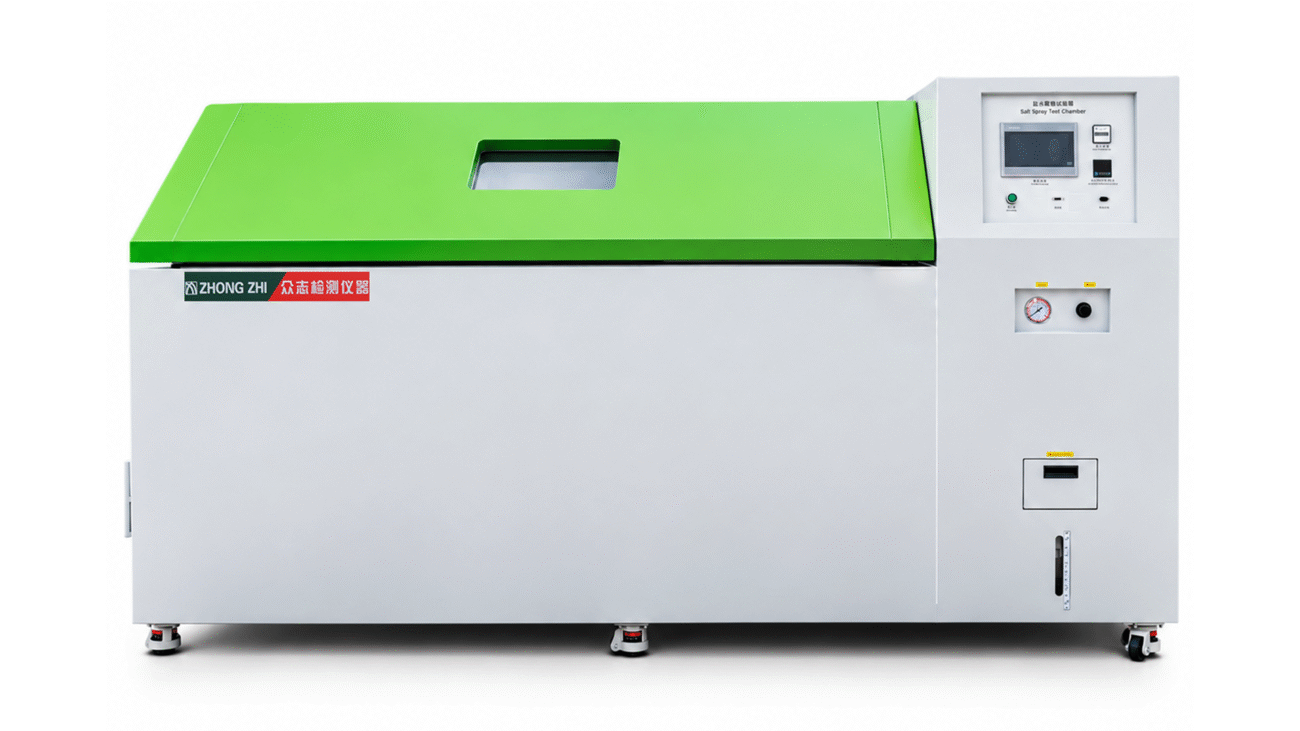
Programmable settings help users manage test stages and maintain repeatable conditions.
6. Choosing a Suitable Cyclic Corrosion Test Chamber
Reliable results depend on more than spraying salt solution. The chamber should provide stable temperature and humidity control, consistent spray performance, and repeatable drying conditions. Programmable operation is also important because different products and test methods may require different sequences, exposure times, and environmental settings.
Commonly referenced methods include ASTM G85, SAE J2334, ISO 14993, and ISO 11997-1. These standards do not all describe the same test cycle, so users should confirm the required method with their customer, laboratory, or product specification before selecting equipment or starting a test. Choosing a chamber that matches the intended test method helps laboratories and manufacturers carry out corrosion evaluations more consistently.
For laboratories and manufacturers requiring comprehensive corrosion evaluation, a composite salt spray dry and wet test chamber provides a practical solution for simulating changing environmental conditions. It helps evaluate the corrosion resistance and durability of metals, protective coatings, automotive components, and other industrial materials through alternating salt spray, drying, and humidity testing.
Explore our Composite Salt Spray Dry and Wet Test Chamber to learn more about its testing capabilities and applications.