


News
What is the difference between dry heating and water heating of salt spray machine?

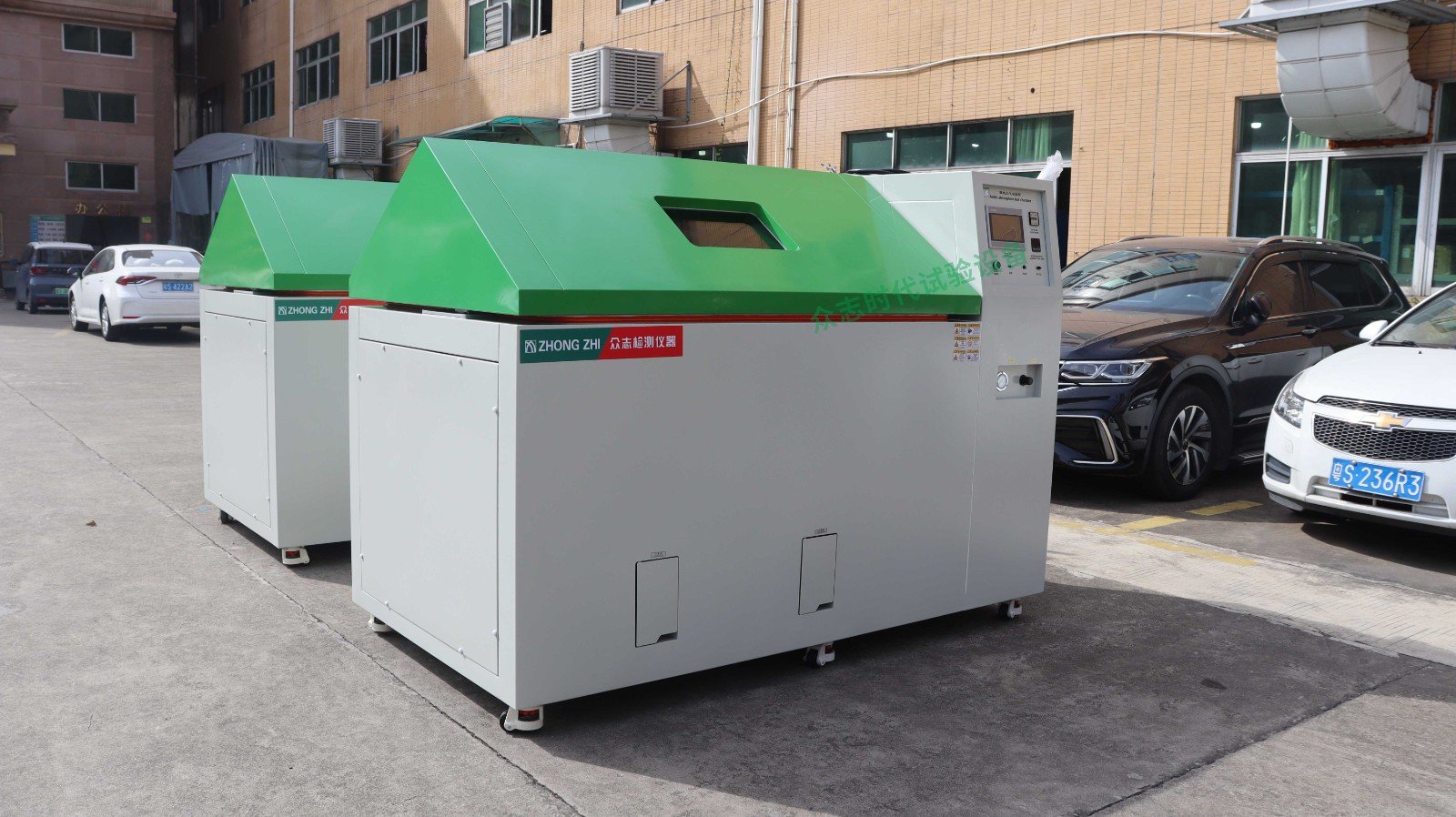
The main differences between dry heating and water heating in Zhongzhi Times salt spray machines are as follows:
- Heating Principle:
- Dry Heating: Dry-heating salt spray machines primarily heat the air by installing heating elements inside the device, such as heating wires or heating tubes, to directly heat the air inside the test chamber, raising the air temperature within the test chamber and creating an ambient temperature that meets the requirements of the salt spray test. This heating method does not rely on water as a heat transfer medium.
- Water Heating: Water-heating salt spray machines heat the water in a tank, indirectly raising the temperature within the test chamber through the heat transfer of the water. Typically, a water jacket is installed at the bottom or around the test chamber. Once the water in the jacket is heated, the heat is transferred to the chamber interior through the jacket walls.
- Heating Speed:
- Dry Heating: Because air has relatively poor thermal conductivity, dry heating directly heats the air, allowing for more direct heat transfer. Therefore, dry-heating salt spray machines heat up faster, reaching the set test temperature in a shorter time, reducing test waiting time.
- Water Heating: Water has a large specific heat capacity, so heating water requires time to accumulate heat. Transferring the heat from the water to the test chamber also takes time. Therefore, water-heated salt spray machines heat up relatively slowly, and a longer warm-up period may be required before the test begins.
- Temperature Uniformity: (Dongguan Zhongzhi)
- Dry Heating: Dry heating heats the air, making it easier for the air to flow and mix within the test chamber. Therefore, dry-heated salt spray machines can achieve a certain degree of temperature uniformity within the test chamber. However, if the layout and power design of the heating elements are not optimized, local temperature variations may occur.
- Water Heating: Water conducts heat relatively evenly. Water-jacketed heating can ensure a relatively uniform temperature distribution across the test chamber walls, thereby ensuring a relatively uniform temperature distribution within the chamber. However, if the water jacket is not properly designed or the water circulation is not smooth, temperature uniformity may be affected.
- Impact on Salt Spray Concentration and Test Results:
- Dry Heating: Dry heating does not directly affect salt spray concentration due to factors such as water evaporation. Therefore, it offers relatively good stability in salt spray concentration and higher test results accuracy.
- Water Heating: During water heating, water evaporation may cause changes in salt spray concentration, affecting the accuracy of test results. Furthermore, condensation generated by water heating may form on the product surface or drip into the collection liquid, diluting the salt water concentration and changing the pH, further affecting test results.
- Energy Consumption:
- Dry Heating: Dry heating salt spray machines directly heat the air, resulting in relatively high energy conversion efficiency. For the same temperature, energy consumption may be relatively low. However, if dry heating methods are not well insulated, heat loss may occur rapidly, potentially leading to increased energy consumption.
- Water Heating: Water has a high specific heat capacity, requiring more energy to heat water. Furthermore, water-jacketed heating methods may experience energy losses during heat transfer, resulting in relatively high energy consumption for water-heated salt spray machines.
- Equipment Structure and Maintenance:
- Dry Heating: Dry-heating salt spray machines have a relatively simple structure, lacking water-related components such as a water jacket and water tank. Therefore, the equipment can be relatively small and takes up less space. Furthermore, the lack of water reduces maintenance costs and the risk of equipment failures due to problems such as water leaks and rust.
- Water Heating: Water-heating salt spray machines have a relatively complex structure, requiring components such as a water tank, water jacket, and water pump to circulate and heat the water. This increases manufacturing costs and makes maintenance more difficult. Furthermore, over time, the water system may develop problems such as scaling and corrosion, requiring regular cleaning and maintenance.