


News
How long does one cycle of salt spray test equal to the natural environment?

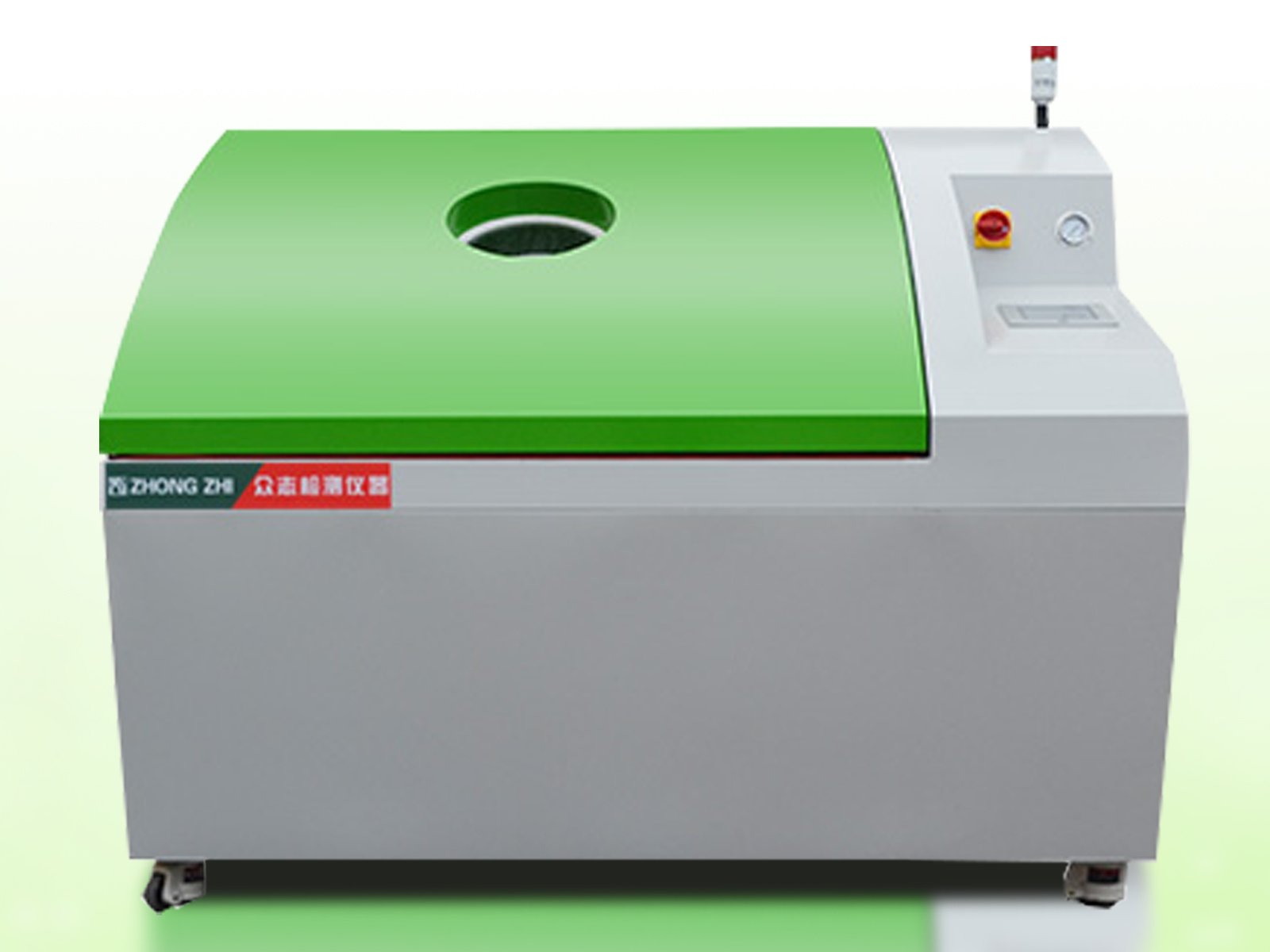
Many people have asked how long a one-hour salt spray test lasts in the field, and how does salt spray test time correspond to actual use? Nanjing Ruidu shares some principles of salt spray testing, common problems, and their corresponding relationships, providing information on salt spray testing and ISO12944 corrosion testing.
Principles of Salt Spray Corrosion
Most corrosion of metal materials occurs in atmospheric environments, which contain corrosive components and factors such as oxygen, humidity, temperature fluctuations, and pollutants. Salt spray corrosion is a common and most destructive type of atmospheric corrosion.
Salt spray corrosion on metal materials occurs primarily due to the penetration of conductive salt solutions into the metal, triggering an electrochemical reaction. This creates a micro-battery system of “low-potential metal-electrolyte solution-high-potential impurities.” Electron transfer occurs, dissolving the metal at the anode and forming new compounds known as corrosive products. Chloride ions play a primary role in the salt spray corrosion process. Chloride ions have strong penetrating power and easily penetrate metal oxide layers, destroying the metal’s passivity. Furthermore, chloride ions have low hydration energy and are easily adsorbed on metal surfaces, displacing oxygen from the protective oxide layer and causing damage.
Salt spray testing is an accelerated corrosion assessment method using artificial atmospheres. It involves atomizing salt water of a certain concentration and spraying it into a sealed, constant-temperature chamber. The corrosion resistance of the sample is then observed after a period of exposure. This accelerated testing method utilizes chloride concentrations in the salt spray environment, which can be several times or even dozens of times higher than that found in natural salt spray, significantly increasing the corrosion rate and significantly shortening the time required to obtain results.
Testing a product sample in a natural environment can take a year or even several years to corrode, while testing in an artificially simulated salt spray environment can yield similar results in just days or even hours.
Salt spray tests are primarily divided into four types:
Neutral Salt Spray Test (NSS);
Acetic Acid Salt Spray Test (AASS);
Copper-Accelerated Acetic Acid Salt Spray Test (CASS);
Alternating Salt Spray Test
According to the ISO 21207 standard, a two-week test period is equivalent to an eight-year lifespan in an industrial environment. Test Methods:
- Neutral salt spray test: 2 hours, followed by 22 hours of drying under laboratory conditions.
- NO2 concentration: 10×10°C, SO2 concentration: 5×10°C, humidity: 95%, and temperature: 25°C, test period: 48 hours.
- Neutral salt spray test: 2 hours, followed by 22 hours of drying under laboratory conditions.
- NO2 concentration: 10×10°C, SO2 concentration: 5×10°C, humidity: 95%, and temperature: 25°C, test period: 72 hours.
The above is a test cycle, totaling one week.
One week is equivalent to three years, which is equivalent to two hours = one month.
Two weeks is equivalent to eight years.
Three weeks is equivalent to 14 years.
There are no national standards or regulations to verify the correlation between salt spray test duration and actual conditions. There are varying estimates, such as some claiming that 24 hours of salt spray is equivalent to one month in the wild. This is not entirely reliable. After all, the natural environment is ever-changing and contains numerous corrosive factors, so there is no direct correlation. Some color-coated steel sheets can withstand 1000 hours of salt spray, but no one can guarantee 20 years of corrosion-free service in natural environments. A more accurate salt spray test is 1000 hours, equivalent to 10 years in a coastal environment.
ISO 12944: Classification and Duration of Corrosion Protection of Coatings
International Standards for Marine Anticorrosion Coatings: ISO 12944/NORSOK M501/ISO 20340
In-depth Analysis of the Current Status and Development of Marine Anticorrosion Coating Application Technologies/Standards for Marine Heavy-Duty Anticorrosion Coatings