


News
Composite salt spray test chamber

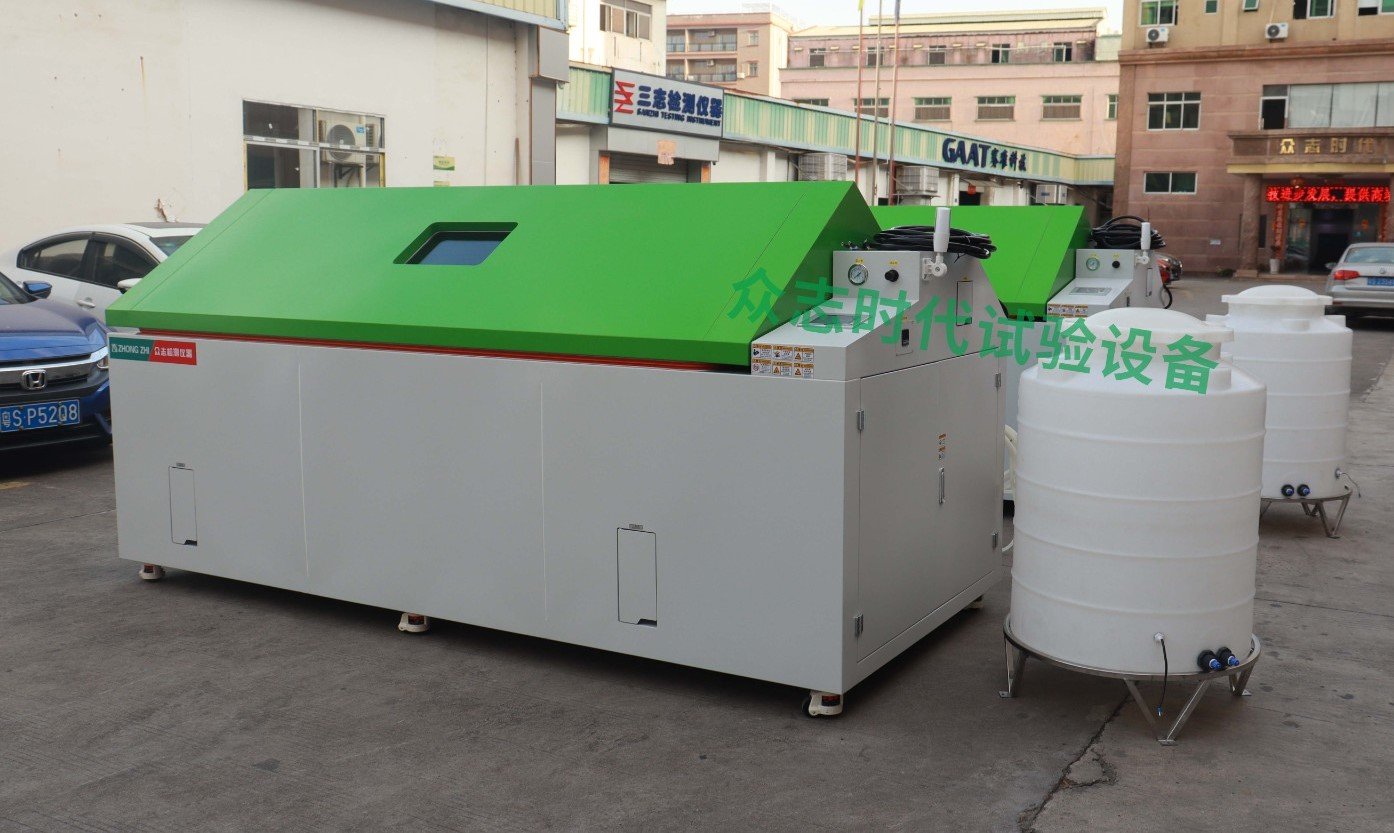
The Zhongzhi Times composite salt spray test chamber is a comprehensive environmental testing instrument that integrates salt spray, humidity, heat, drying, and circulation testing. The following is a detailed introduction:
- Working Principle:
- Its core function is to simulate the high salt content, humidity, and temperature fluctuations found in natural environments, conducting accelerated corrosion tests on test samples to evaluate the durability and corrosion resistance of materials, coatings, and products in harsh environments. For example, a prepared salt solution is converted into salt spray and sprayed onto the sample surface, causing a corrosion reaction under specific temperature and humidity conditions.
- Structural Components:
- Chamber: Generally constructed of corrosion-resistant materials such as PP sheet and stainless steel, ensuring the chamber is resistant to damage from long-term exposure to corrosive substances such as salt spray. The entire chamber is molded and welded at high temperatures, ensuring excellent sealing to prevent salt spray from escaping.
- Spray System: Consists of a solvent tank, a variable-speed peristaltic pump, a pneumatic system, a foam tower, and a nozzle. A variable-speed peristaltic pump delivers the corrosive salt solution to the nozzle, where it mixes with compressed air and is atomized into a corrosive mist, spraying it toward the sample. The nozzle is typically made of quartz glass or a special corrosion-resistant material to ensure uniform and stable spray distribution.
- Temperature and humidity control system: This includes components such as heating, cooling, humidifiers, and dehumidifiers, enabling precise control of the temperature and humidity within the test chamber according to test requirements. For example, during a damp heat test, heating and humidification are used to maintain the desired temperature and humidity within the chamber.
- Circuit control system: This is the core control component of the test chamber, responsible for precise control and monitoring of spraying, temperature and humidity control, and test time. It typically utilizes an advanced intelligent controller with a touchscreen interface, allowing users to easily set test parameters and view test data.
- Features:
- Versatility: In addition to basic salt spray testing capabilities, the test chamber can also simulate various environmental conditions, including wet/hot, dry, and alternating conditions. It can perform individual tests or cyclically test multiple environmental conditions according to a pre-set program, more closely resembling the environmental conditions encountered in actual product use.
- Good Environmental Reproducibility: Test conditions, such as salt spray concentration, temperature, humidity, and spray time, can be precisely controlled to ensure accurate and repeatable test results.
- Easy Operation: The intelligent control system makes operation simple and convenient. Users simply set the test parameters on the control panel, and the test chamber automatically operates.
- Safety and Reliability: Equipped with multiple safety protection devices, such as over-temperature protection, low water level protection, and over-current protection, the test chamber ensures a safe and reliable test process.
- Applications:
- Automotive Industry: Used for corrosion resistance testing of automotive components such as engines, transmissions, brake systems, and bodies to evaluate their service life and reliability in harsh environments.
- Aerospace: Conduct salt spray corrosion tests on aircraft components and avionics equipment to ensure their corrosion resistance at high altitudes.
- Electronics: Test the reliability of electronic circuit boards, connectors, and chips in salt spray environments to ensure the quality of these products.
- Building Materials: Test the corrosion resistance of building materials such as steel, paint, and glass to inform material selection for construction projects.
- Technical Parameters:
- Temperature Range: The temperature range varies depending on the model of the composite salt spray test chamber, generally ranging from room temperature + 5°C to 60°C or higher.
- Temperature Uniformity: Temperature uniformity is typically required to be ≤ 2°C to ensure that temperature differences at different locations within the chamber are within the allowable range.
- Temperature Fluctuation: Temperature fluctuation is ≤ ±0.5°C to ensure temperature stability.
- Salt Fog Deposition: Salt fog deposition is generally 1-2 ml/h per 80 cm². The uniformity and stability of salt fog deposition are crucial to the accuracy of test results.
- Spray mode: Continuous spray or intermittent spray can be selected, and users can set this according to test requirements.
- Test timing: The test timing range is usually adjustable from 1 to 9999 hours, minutes, and seconds, allowing users to easily set the test time according to test requirements. Dongguan Zhongzhi