


News
How to determine whether the water in the saturated barrel of the salt spray tester needs to be replaced?

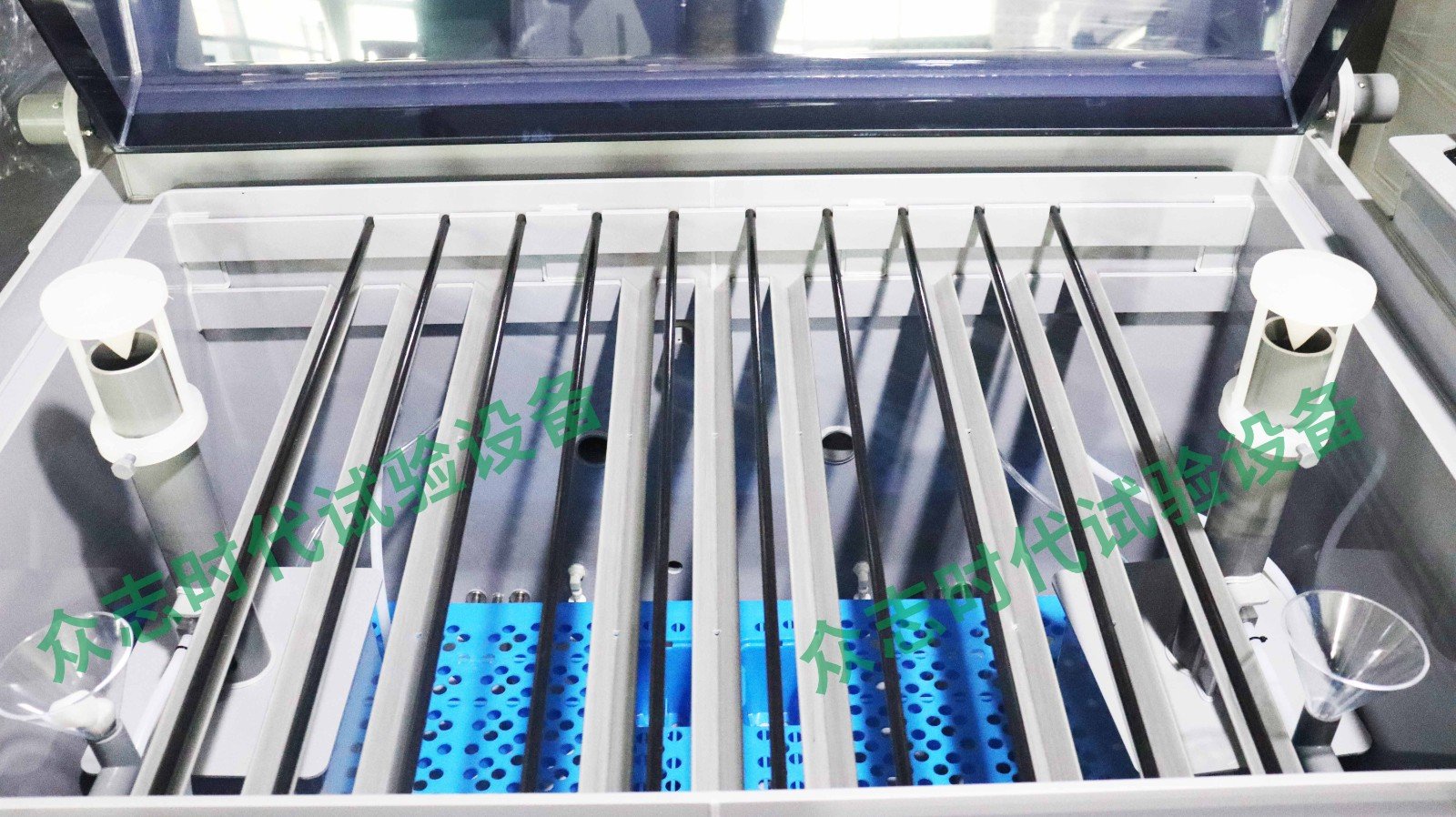
Zhongzhi Times can use the following methods to determine whether the water in the saturation tank of a salt spray tester needs to be replaced:
I. Observing Water Quality
- Clarity:
- Normally, the water in the saturation tank should be relatively clear and transparent. If the water becomes turbid and opaque, it may contain impurities, such as salt from the salt spray or dust from the air. In this case, the water needs to be replaced.
- You can remove a portion of the water from the saturation tank and place it in a transparent container to observe its clarity. If the clarity of the water decreases significantly, it should be replaced.
- Color Change:
- Pure water is colorless. If the water in the saturation tank changes color, such as turning yellow or brown, it may be due to the presence of certain substances in the water or a chemical reaction.
- For example, if the water contains rust, it may turn the water yellow-brown. In this case, the water needs to be replaced to ensure the accuracy of the test.
II. Checking Test Results
- Salt Spray Deposition:
- The salt spray deposition rate of the salt spray tester is a critical indicator that directly impacts the accuracy of the test results. Problems with the water in the saturation tank may cause the salt spray deposition to be unstable or substandard.
- Regularly measure the salt spray deposition. If the deposition rate deviates significantly from the standard, and other factors have been eliminated, the water in the saturation tank may need to be replaced.
- A salt spray collector can be used to measure salt spray deposition. The general requirement is a salt spray deposition rate of 1-2 ml/h per 80 cm².
- Corrosion of the Test Specimen:
- If the corrosion of the test specimen does not meet expectations or exhibits unusual corrosion, the salt spray tester may be operating abnormally, with the water in the saturation tank potentially being a contributing factor.
- For example, if the corrosion rate of the test specimen is too fast or too slow, or if the corrosion location differs from previous test results, it may be necessary to check whether the water in the saturation tank needs to be replaced.
III. Equipment Operation
- Pressure Fluctuations:
- The water in the saturation tank of the salt spray tester operates under a certain pressure. If the pressure fluctuates abnormally, it may be due to a water problem affecting the normal operation of the equipment.
- Observe the equipment’s pressure gauge. If the pressure is unstable or outside the normal range, it may be necessary to check whether the water in the saturation tank needs to be replaced.
- Also, check the equipment’s pipes, valves, and other components for blockages or leaks, which may also cause pressure fluctuations.
- Water Level Fluctuations:
- Regularly check the water level in the saturation tank. If the water level drops too quickly, it may be due to water consumption or leakage during the test, or impurities in the water may be affecting the accuracy of the water level.
- If the water level drops significantly, check the equipment for leaks and consider replacing the water in the saturation tank.
- Additionally, if the water level is too high, it may affect the generation of salt spray and the test results, and the water level may need to be adjusted promptly.
In summary, Dongguan Zhongzhi recommends that you determine whether the water in the salt spray tester’s saturation tank needs to be replaced by observing the water quality, checking the test results, and inspecting the equipment’s operation. In actual use, a reasonable water change cycle should be formulated according to the specific situation, and the equipment should be maintained and inspected regularly to ensure the accuracy and reliability of the test results.